
Table of Contents
Most bathroom remodel decisions do not start with inspiration. They start with frustration. A tub that feels awkward to step into. A shower that never quite stays dry. Or a bathroom that technically works but feels dated and uncomfortable.
At some point, that frustration leads to a practical question. Do you keep the bathtub, or does it make more sense to replace it with a walk-in shower?
This question comes up often in Indianapolis homes, especially older homes where bathrooms were built around layouts that no longer fit how people live today. The answer is rarely about trends. It usually comes down to how the space is used, who uses it, and how long the home is expected to serve its owners.
How the Bathroom Is Actually Used Should Drive the Decision
Before comparing a walk-in shower vs. a tub, it helps to step away from design ideas and look at daily habits.
Some homeowners shower every day and never touch the tub. Others rely on a bathtub for young children or shared family routines. A master bathroom remodel has very different priorities than a guest bathroom remodel or a small bathroom remodel that serves the whole household.
In many Indianapolis homes, tubs were installed by default, even when space was limited. That does not mean they still make sense. Replacing a bathtub with a shower often improves function simply because routines have changed over time. This is one of the most common bathroom remodel decisions we see.
Why Walk-In Showers Are Chosen So Often
A walk-in shower remodel appeals to homeowners who want fewer obstacles and better use of space. Removing the tub wall eliminates a step that feels unnecessary now and can become a safety concern later.
Walk-in shower accessibility matters most when daily use needs to stay predictable and straightforward. Features like grab bars, a properly built shower pan, and solid waterproofing behind the tile matter far more than surface finishes. These details are what make the shower usable long term.
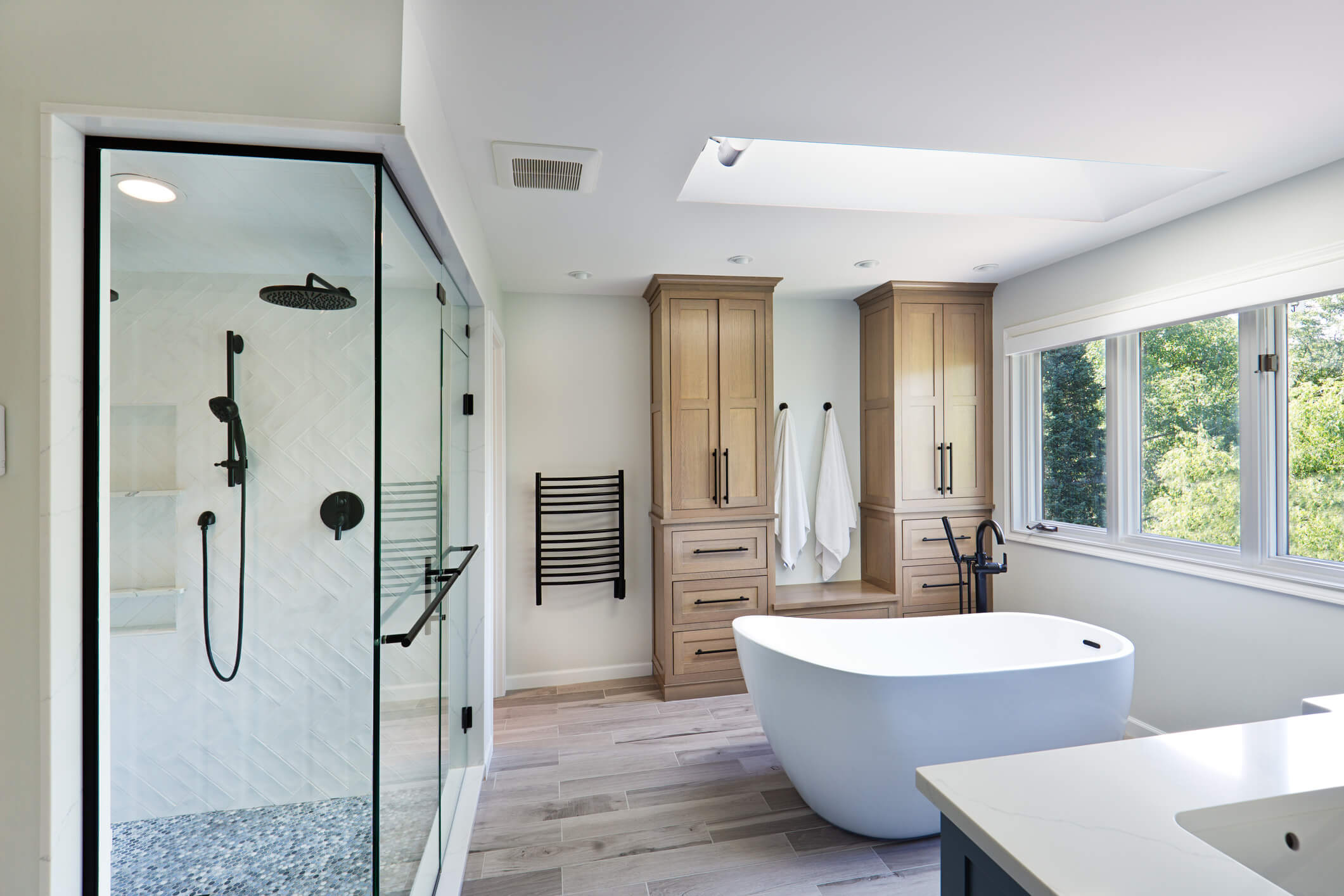
In smaller bathrooms, walk-in showers often improve the overall layout. Glass shower enclosures let light flow through the room, making tight spaces feel less closed in. This is especially helpful in older homes where windows are small or poorly placed.
That said, walk-in showers are not the right choice for every bathroom. Homes with young children usually benefit from having at least one bathtub and a shower. We see regret most often when every tub is removed without considering how the home might be used or sold later.
Bathtubs Still Have a Place in the Right Homes
Bathtubs are not outdated. They are just more situational than they used to be.
A soaking tub still makes sense for homeowners who actually use it, particularly in a larger master bathroom remodel. Freestanding tub designs work well when space allows and when the tub is meant to be used, not just displayed.
For homeowners focused on accessibility but who still want the option to soak, a walk-in tub can be a practical solution. These tubs reduce the need to step over a high wall while supporting long-term use.
From a resale standpoint, keeping at least one tub in the home often protects flexibility. In the Indianapolis resale market, especially in family-oriented neighborhoods, buyers still expect a tub in a full bathroom. Removing every tub can limit the pool of future buyers.
The trade-off is space. In a small bathroom, a tub can limit movement and storage space. Installation costs also increase quickly when homeowners choose soaking tubs or freestanding tubs without adjusting the layout.
Tub to Shower Conversion as a Practical Middle Ground
Not every homeowner wants a full bathroom renovation. Sometimes the goal is simple. The tub no longer works, and the rest of the bathroom does.
A tub to shower conversion replaces the bathtub with a shower while keeping much of the existing bathroom intact. This approach works well when the layout still functions and the goal is improved daily use.
The cost of a tub-to-shower conversion depends on tile selection, waterproofing, and plumbing conditions. In older Indianapolis homes, costs often increase once the tub is removed and outdated plumbing or framing is uncovered. That is common, not unusual.
While this option is often more affordable than a full remodel, it still requires proper installation. Poor waterproofing or rushed prep work usually leads to problems later.
Shower Remodel vs Full Bathroom Remodel
Understanding the difference between a shower remodel and a full bathroom remodel helps set expectations early.
A shower remodel focuses on one area. A full bathroom remodel often includes flooring, lighting, layout adjustments, and fixture replacements throughout the room. The cost difference can be significant, but so can the improvement in function.
If the bathroom layout works and storage needs are met, a shower replacement may solve the main issue. If the room feels cramped or inefficient overall, a full bathroom remodel often delivers better long-term value.
Budget Decisions and Long-Term Planning
Bathroom remodel cost should reflect how long the home is expected to serve its owners.
Homeowners planning to age in place usually prioritize accessibility and ease of use. Those thinking about selling weigh resale considerations more heavily. Installation costs vary based on materials, waterproofing requirements, and labor, but the most important factor is what is behind the walls.
Shower remodel cost and tub to shower conversion cost should always account for proper prep and waterproofing. These are not areas where shortcuts pay off.
What Typically Works Best in Indianapolis Homes
Local housing styles matter. Many older homes have smaller bathrooms where walk-in showers improve function and flow. Newer homes often include both a soaking tub and a separate walk-in shower.
In practice, most homeowners we work with choose a walk-in shower unless the bathroom is intended for children or resale is a near-term priority. That pattern keeps showing up.
Talk Through the Options Before Committing
Most homeowners already know which direction they are leaning. What they usually need is confirmation that the choice will work in their home, their layout, and their budget.
A walkthrough and an honest discussion often prevent weeks of second-guessing later. The right decision comes from understanding the space, not forcing it into a trend.
Talk to Gettum Remodeling, your local design-build remodeling experts serving Indianapolis, Carmel, Fishers, Greenwood, and Zionsville. Our team will help you choose upgrades that strike the right balance of comfort, design, and long-term value for your home.
FAQs Section
Is a walk-in shower better for resale than a bathtub?
It depends on the home and the buyer. Many prefer walk-in showers, but families often expect at least one bathtub in full bathrooms.
How much does a tub to shower conversion cost?
The cost of a tub-to-shower conversion varies based on materials, waterproofing, and existing plumbing conditions.
Are walk-in showers a good choice for small bathrooms?
Yes. Walk-in showers often improve flow and make a small bathroom feel more open.
Should I keep a tub if I have young children?
Most families benefit from having at least one bathtub. It supports daily routines and flexibility.
What safety features matter most in a shower remodel?
Grab bars, non-slip surfaces, a properly built shower pan, and solid waterproofing matter most.
Does a shower remodel cost less than a full bathroom remodel?
In many cases, yes. A full remodel includes broader updates that increase cost.